Upper Mustang Trek

Trek Duration
16 days

Best time to go
Sep-Nov, Mar-May

Group Size
2-25 People

Max Trekking Altitude
3810m

Accommodation
Tea Houses

Trek Grade
moderate

Area
Mustang

Hours of Walking
5-9 Hours per day

Start point - End point
Kathmandu
Overview of Upper Mustang Trek
The Upper Mustang Trek is a unique and captivating journey that transports trekkers into a hidden realm of ancient culture, dramatic landscapes, and centuries old Tibetan traditions. Located in the rain shadow of the Annapurna and Dhaulagiri ranges in northwestern Nepal, Upper Mustang was a restricted demilitarized zone until 1992, preserving its pristine environment and distinct Tibetan Buddhist heritage.
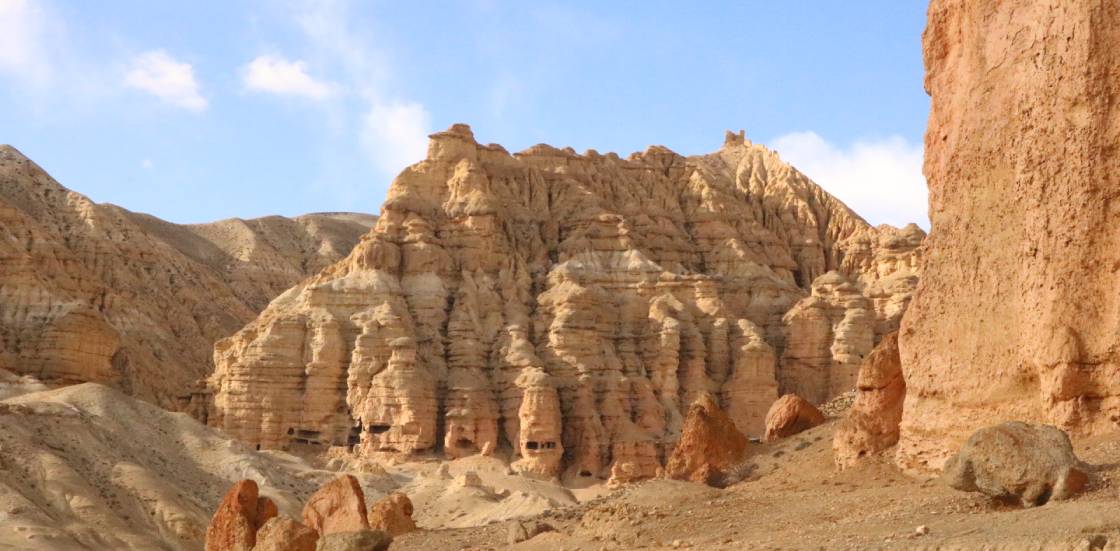
This remote region was once part of the ancient Kingdom of Lo, with its capital in Lo Manthan an enchanting walled city that still houses royal palaces, monasteries, and traditional whitewashed homes. Unlike the lush greenery of other trekking routes in Nepal, Upper Mustang offers a stark and surreal landscape of eroded cliffs, red canyons, and windswept plateaus that resemble the high altitude deserts of Tibet.
The Upper Mustang Trek begins in Jomsom after a short flight from Pokhara and gradually ascends through remote villages like Kagbeni, Chele, and Ghami, where trekkers experience the local way of life, ancient cave dwellings, and monasteries adorned with colorful prayer flags and murals. The culture here remains deeply connected to Tibetan roots, and local customs, language, and architecture reflect this strong heritage.
Due to its location in the trans-Himalayan region, the trek is possible even during the monsoon months (June to August), as the area receives minimal rainfall. The trail offers not only cultural immersion but also spectacular views of snow-capped peaks, including Nilgiri, Annapurna, and Dhaulagiri. Trekking in Upper Mustang requires a special permit, emphasizing its status as a protected area. Though the altitude remains moderate compared to other Himalayan treks rarely exceeding 4,000 meters it still demands good physical fitness and acclimatization.
The relatively lower number of trekkers ensures a more peaceful and authentic experience, far from the crowded trails of the Everest or Annapurna regions. As one of Nepal most extraordinary trekking experiences, the Upper Mustang Trek is ideal for adventurers seeking both spiritual insight and natural beauty in an off-the-beaten-path destination. Its blend of mysticism, history, and raw Himalayan charm makes it a bucket-list-worthy expedition that offers a glimpse into a vanishing world, where ancient traditions still thrive against a backdrop of rugged and mesmerizing terrain.
The Upper Mustang Trek trekking route passes through an almost treeless landscape and infertile areas. You will feel a strong wind blowing during the day time. In addition, experiencing the culture, religion, and lifestyle of the Mananghis is another social aspect highly noticeable. The medieval wall city of Lo Monthang, un-official capital of Mustang still remains a kingdom.
The history of Lo Manthang is based on myth and legend rather than the recorded detail. Mustang maintained its status as a separate principality until 1951. Trekking to Upper Mustang was officially opened in 1992 with a special permit. Only a limited number of trekkers is allowed to explore this remote region each year. Nepal government wants to protect and conserve the local Tibetan culture and tradition and the fragile environment of the Upper Mustang region.
Upper Mustang Trek is one of the best treks one can do even in the monsoon season. As it lies in the rain shadow area, north of Annapurna and Dhaulagiri ranges, completely well- sheltered from the monsoon. We take flights for both ways Pokhara- Jomsom – Pokhara to avoid the lower rainy section hike in Annapurna region. The best advantage of doing this cultural trek in monsoon season is that the village is full of local people busy at their every day works.
Furthermore, the whole region is in bloom which makes really a fabulous contrast with the wind eroded hills, red cliffs and snow-capped mountains in the natural setting a great vista. Thus, the upper Mustang trek would be once in a lifetime experience for those who want to explore the fascinating medieval town of Lo Manthang and the ancient caves.
Itinerary
Upon arrival at Tribhuvan International Airport in Kathmandu (1,300m), you will be greeted by a representative and transferred to your hotel. Take the rest of the day to relax and recover from your journey, or explore the nearby surroundings at your leisure.
After breakfast, embark on a guided sightseeing tour of Kathmandu Valley, a UNESCO World Heritage site. Visit iconic landmarks such as Swayambhunath (Monkey Temple), Boudhanath Stupa, Pashupatinath Temple, and Kathmandu Durbar Square. In the afternoon, meet your trekking guide for a detailed briefing, finalize permits, and check your gear. Overnight stay at the hotel.
After an early breakfast, drive westward to Pokhara, a scenic lakeside city nestled beneath the Annapurna mountain range. Enjoy picturesque views of rivers, terraced fields, and rural villages along the way. Upon arrival in Pokhara, check in to your hotel and relax by the tranquil Phewa Lake or explore the vibrant Lakeside area. Overnight in Pokhara.
Take an early morning scenic drive (or flight, if applicable) from Pokhara to Jomsom, the district headquarters of Mustang, known for its arid landscapes and strong winds.
From Jomsom (approx. 2,720m), begin your trek along the Kali Gandaki River, passing through small villages and striking desert-like terrain. Reach Kagbeni, a medieval village on the border of Upper Mustang, rich in Tibetan culture and architecture. Overnight stay in Kagbeni.
After breakfast, begin your journey into the restricted region of Upper Mustang. You’ll follow the trail along the Kali Gandaki River, passing through traditional villages, ancient chortens, and rugged, windswept terrain.
The route gradually ascends, offering striking views of eroded cliffs and distant snow-capped peaks. Along the way, you’ll pass through the village of Tangbe, known for its whitewashed houses, narrow alleys, and apple orchards. Continue toward Chhusang before crossing a river to reach the village of Chele, where Tibetan influence is clearly visible in the culture and architecture. Overnight in Chele.
Today’s trek is a steady climb through a dramatic and arid landscape shaped by wind and time. Leaving Chele, the trail ascends steeply to the Taklam La Pass (3,624m), offering panoramic views of the surrounding valleys and distant peaks. You’ll continue along a ridge, pass through the picturesque village of Samar, and descend into a deep gorge before ascending again through juniper trees and sparse vegetation.
The route takes you over the Dajori La Pass (3,735m), after which a gradual descent brings you to the beautiful village of Geling, set below a red cliff and surrounded by fields of barley. Overnight in Geling.
Departing from Geling, the trail climbs gently through fields and across the Nyi La Pass (3,950m), one of the highest points of the trek, offering wide views of the Mustang landscape and surrounding peaks. After crossing the pass, descend gradually to the village of Ghami, one of the largest settlements in Upper Mustang, where you’ll see traditional houses and ancient mani walls.
From Ghami, the path continues through rugged terrain, crosses a river, and ascends again to the Choya La Pass (3,870m), before descending into Charang. This ancient village is home to an impressive red-walled monastery and an old palace set on the edge of a vast, windswept plateau. Overnight in Charang.
Leaving Charang, the trail descends briefly before crossing a river and gradually ascending toward the windswept Lo La Pass (3,950m). From the top of the pass, you’ll get your first breathtaking view of Lo-Manthang, the walled capital of Upper Mustang, nestled in a vast and desolate valley beneath the Tibetan plateau.
The landscape is stark yet striking, with red and ochre cliffs, eroded canyons, and distant views of the Himalayas. After a short descent, arrive in Lo-Manthang, a culturally rich town known for its labyrinth of narrow alleyways, whitewashed houses, and centuries-old monasteries. Spend the evening exploring this ancient kingdom. Overnight in Lo-Manthang.
Today is dedicated to exploring the fascinating walled city of Lo-Manthang, the cultural and historical heart of Upper Mustang. Wander through its narrow, winding alleys and visit ancient monasteries such as Jampa Lhakhang, Thubchen Gompa, and Chodey Gompa, each rich with centuries-old murals, statues, and religious artifacts. You may also visit the Royal Palace, a four-story building that once housed the Mustang king and his family.
For those seeking a short excursion, you can hike or take a horseback ride to nearby attractions like the Chhoser Cave Complex, known for its man-made cave dwellings carved into cliffs. Enjoy a relaxed evening soaking in the unique atmosphere of this remote Himalayan kingdom. Overnight in Lo-Manthang.
Leaving the ancient walled city of Lo-Manthang, the trail ascends gently through rugged terrain dotted with prayer flags and chortens. You’ll pass traditional Tibetan-style villages and open expanses of the Mustang plateau, with spectacular views of the surrounding arid mountains and distant Himalayan peaks.
The path winds along ridges and descends briefly before a final climb to Drakmar, a small, peaceful village perched at 3,810 meters. This remote settlement offers a glimpse into traditional Mustang life and stunning sunset vistas. Overnight in Drakmar.
Today’s trek follows a relatively gentle path as you leave Drakmar and continue through the rugged Mustang landscape. The trail winds along rocky ridges and open plateaus, offering panoramic views of the surrounding valleys and distant Himalayan peaks.
Passing small clusters of traditional stone houses and prayer flags fluttering in the wind, you’ll arrive at Ghiling, a quiet village nestled amidst arid hills at 3,806 meters. Enjoy the peaceful atmosphere and authentic local culture during your overnight stay in Ghiling.
Departing from Ghiling, the trail gradually descends through the stark, rocky landscapes of Upper Mustang. Along the way, you’ll pass traditional villages with their distinctive Tibetan-style architecture and vibrant prayer flags.
The path winds alongside the Kali Gandaki River, offering stunning views of deep gorges and towering cliffs. En route, you may encounter ancient mani walls and small monasteries that reflect the region’s rich cultural heritage.
Arriving in Chhuksang, a village famed for its ancient fortress ruins and traditional stone houses, you’ll settle in for the night surrounded by breathtaking mountain scenery.
Today’s trek follows the Kali Gandaki River as you descend from the rugged terrain of Upper Mustang toward the more hospitable valley of Jomsom. The trail winds through charming villages and terraced fields, passing by traditional stone houses and fluttering prayer flags.
As you approach Jomsom, the landscape becomes greener and more cultivated, with stunning views of the Annapurna and Dhaulagiri mountain ranges. Upon arrival in Jomsom, you can relax in this lively town and prepare for your onward journey. Overnight stay in Jomsom.
After breakfast, take Jeep from Jomsom to Pokhara, descending from the high Mustang region to the lush, green foothills of the Annapurna range.
The Drive offers spectacular aerial views of the Kali Gandaki Gorge, towering peaks, and picturesque valleys. Upon arrival in Pokhara, transfer to your hotel and enjoy some well-deserved rest or explore the vibrant Lakeside area at your leisure. Overnight in Pokhara.
After breakfast, begin your scenic drive back to Kathmandu. The route winds through picturesque hills, terraced fields, and traditional villages, offering plenty of opportunities to soak in Nepal’s beautiful countryside.
Along the way, you may stop for breaks in quaint towns or to enjoy local snacks. Upon arrival in Kathmandu, check into your hotel and relax after the day’s journey. Overnight in Kathmandu.
After breakfast and some last-minute shopping or sightseeing (time permitting), you will be transferred to Tribhuvan International Airport for your onward flight to your next destination. Reflect on the incredible journey through the Himalayas and the rich cultural experiences you’ve enjoyed in Nepal as you prepare for your departure. Safe travels!
Cost Include
- Airport pick up and Drop by private car/van/bus
- 3 nights’ accommodation in Kathmandu with bed and breakfast basis
- 2 nights’ accommodation in Pokhara with bed and breakfast basis
- All meals (Breakfast, Lunch, and Dinner) during the trekking(single item)
- Plenty of safe drinking water & basic medicine during the trek
- Trekking equipment (sleeping bag, down jacket, trekking pole) if requires
- Well English speaking (Government License holder) trekking guide
- All necessary paper works
- Special Trekking Permit USD 500 per person for 10 days (the above price includes 10 days valid
- trekking permit from Kagbeni to Kagbeni. If you would wish to stay more than 10 days in the restricted area, you are subjected to an extra charge for extra days (USD 50 per day / per person).
- Annapurna conservation Permit fee
- Kathmandu – Pokhara – Kathmandu by tourist bus
- Pokhara to Jomsom – Pokhara private jeep
- All accommodations in lodges/tea houses
- An experienced Government licensed guide and porters (1 porter for 2 people).
- Salary, Food, Drinks, Accommodation, for staff
- Transportation and Insurance for the Guide and Porter Medical supplies (first aid kit will be available)
- Farewell dinner with typical Nepali restaurant
- All government taxes
Cost Exclude
- International airfare to Nepal
- Lunch and dinner in Kathmandu & Pokhara (excluding the farewell dinner)
- Personal medicines
- Personal clothing & equipment
- Nepal entry visa fee
- Travel insurance and helicopter charter in an emergency situation if you want us to arrange
- Items of personal nature (Personal Expenses)
- Any kinds of alcoholic drinks, cold drinks, phone call, internet, laundry etc.
- Tips for our crew (Guide and porter )
FAQs
The Upper Mustang Trek is a unique and culturally rich trekking route in the remote northern part of Nepal, inside the Mustang district. Often called the “Last Forbidden Kingdom,” Upper Mustang is a former kingdom that was restricted to outsiders until 1992, which has helped preserve its distinct Tibetan-influenced culture, traditions, and landscape.
The Upper Mustang Trek is moderately challenging, mainly due to its high altitude (up to about 4,000m) and remote, rugged terrain. While the trails are mostly well-defined and not technically difficult, the dry, windy conditions and long days of hiking require good fitness and proper acclimatization. It’s best suited for trekkers with some prior experience and a strong interest in culture and adventure.
The best time to do the Upper Mustang Trek is spring (March to May) and autumn (September to November). During these months, the weather is generally clear and mild, with stable skies, making it ideal for trekking and enjoying spectacular mountain views.
Spring offers blooming rhododendrons and warmer temperatures, while autumn provides crisp air and vibrant harvest season colors. Winter can be very cold and summer sees the monsoon rains, which are less ideal for trekking in this region.
The Upper Mustang Trek typically takes about 12 to 18 days, depending on the exact route and pace you choose. This duration allows for gradual acclimatization to the high altitude, ample time to explore cultural sites like Lo-Manthang, and comfortable trekking days averaging 4 to 6 hours. Some itineraries may be shorter or longer based on side trips or rest days, but most trekkers plan around two weeks to fully experience the stunning landscapes and rich Tibetan-influenced culture of the region.
During the Upper Mustang Trek, you’ll mostly stay in tea houses simple lodges run by local families that offer basic but comfortable accommodation. These tea houses usually have clean rooms with shared or private bathrooms, and sometimes heating during colder months.
As for food, the options are quite good given the remote location. You can expect a mix of traditional Tibetan and Nepali dishes like dal bhat (rice and lentils), noodles, momos (dumplings), thukpa (noodle soup), and simple vegetable or meat curries. Tea houses also serve snacks, biscuits, and plenty of hot drinks like tea, coffee, and hot lemon to keep you warm.
For the Upper Mustang Trek, it’s important to pack clothes that can handle dry, windy, and variable weather. Here’s a quick rundown of what to bring:
Layered clothing: Lightweight base layers (moisture-wicking), warm mid-layers (fleece or down jacket), and a waterproof/windproof outer shell.
Warm jacket: A good insulated jacket for cold mornings, evenings, and higher altitudes.
Trekking pants: Comfortable, breathable, and quick-drying.
Hat and gloves: A warm hat for cold weather and sun protection hat for daytime; insulated gloves for chilly conditions.
Good trekking boots: Sturdy, broken-in, and waterproof boots with good ankle support.
Socks: Moisture-wicking trekking socks plus warm socks for nights.
Sun protection: Sunglasses with UV protection, sunscreen, and lip balm (the sun is strong at high altitudes).
Optional: Gaiters for dust and wind, and a buff or scarf for face protection.
For the Upper Mustang Trek, it’s wise to carry a basic medical kit tailored for high-altitude trekking and common travel ailments. Here’s what you should include:
Altitude sickness medication: Acetazolamide (Diamox) is commonly used to help prevent and treat altitude sickness (consult your doctor before use).
Pain relievers and fever reducers: Ibuprofen or paracetamol.
Anti-diarrheal medication: Such as loperamide (Imodium).
Antacids: For stomach upset or indigestion.
Antibiotics: A broad-spectrum antibiotic can be helpful but only use if prescribed by a doctor.
Bandages and blister treatment: Adhesive bandages, blister pads, antiseptic cream, and gauze.
Cold and allergy medicines: Decongestants, antihistamines, throat lozenges.
Electrolyte powders: To stay hydrated and maintain salt balance.
Personal prescriptions: Any medications you regularly take.
Yes, travel insurance is essential for the Upper Mustang Trek due to the remote and high-altitude nature of the region. It provides important coverage for medical emergencies, including evacuation and helicopter rescue, which can be costly and are sometimes necessary in case of altitude sickness or injury.
Additionally, travel insurance protects against trip cancellations, delays, and loss or theft of belongings, giving you peace of mind throughout your journey. Make sure to choose a policy that specifically covers high-altitude trekking and adventure activities to ensure you’re fully protected.
The Upper Mustang permit is expensive mainly because the region is a restricted area with limited access, aimed at preserving its unique cultural heritage and fragile environment.
The Nepalese government controls the number of visitors to protect the traditional Tibetan-influenced lifestyle, ancient monasteries, and natural landscape from over-tourism. The permit fees help fund conservation efforts, maintain local infrastructure, and support the livelihoods of Mustang’s remote communities.
Additionally, the cost reflects the region’s remoteness and the special administrative requirements involved in managing tourism there.
Price Per Person
$1992 (min 2 Person)