Mount Kailash Via Lhasa Tour

Tour Duration
16

Best time to go
May-Septemter

Group Size
1-15 People

Max Altitude
5630 M

Accommodation
3star hotel & Teahouses

Tour Grade
moderate

Area
Tibet

Hours of Walking
4-7 hrs per day

Start point - End point
Kathmandu
All about Mount Kailash Via Lhasa Tour
Mount Kailash Via Lhasa Tour begins from Nepal to Mount Kailash via Lhasa is not a trip of travel books it’s one that awakens your soul and weaves religious renewal into breathtaking grandeur and eternal culture. Pilgrims and travelers alike have swarmed this holy ground for centuries, to be sure, for the naked loveliness of this peaceful high-country landscape but also for the peace that adheres to each mountain pass, monastery, and peaceful desert dunes. This is not a vacation; it’s a once-in-a-lifetime trip to tread the sacred land of sages, saints, and seekers and witness Tibet’s unmatched beauty of nature.
This Mount Kailash Via Lhasa Tour starts in Nepal, and arriving in Tibet is a shift like entering another world, as if one goes through a gateway. Kathmandu, the city of Nepal, is the perfect beginning of the odyssey saturated with temples, religiosity, and urbanity characteristic of this Himalayan nexus. However, as you board the flight for Lhasa, one is enveloped by the seriousness of the pilgrimage to be undertaken.
Flying over the ranges of the Himalayas, snow-capped peaks splitting the sky in two, the very process of traveling an act of ritual. The second you set foot in Lhasa, Tibet’s spiritual capital, you can feel the unmistakable difference in the air you breathe slower, deeper, and wildly peaceful. Lhasa is not a city; it is the very living, breathing heart of Tibetan Buddhism.
A stroll along crowded Barkhor Street, observing pilgrims turn prayer wheels or kneeling in awe before the Jokhang Temple, you will feel minimum respect for the unyielding faith that throbs here. The Potala Palace looms grandly over the city, with rolling horizons and deep religious import as it was once the winter palace of the Dalai Lama.
Nothing in Lhasa is ever talked about but sleeping on the streets, religious restraint, and pursuing loftier truths. It’s a city that makes you slow down and look inward either to the locals, the monks, or to your own inner peace. Away from Lhasa and out onto the Tibetan Plateau, the highway finally begins revealing to you the size of this endless, rock-scrawled, untamed country.
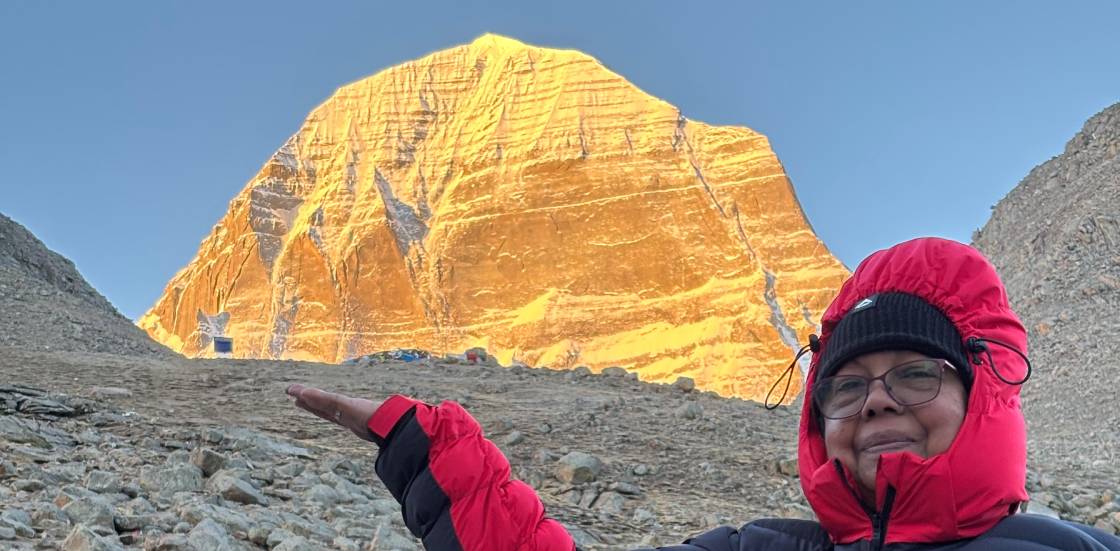
The Mount Kailash Via Lhasa Tour journey itself is one that can leave the viewer gasping. Roads twist through desert below mountains towering high on both horizons, holy lakes glimmer in open blue, and prayer flags stream along high ridges, dispersing blessings to the wind. The altitude rises steadily, allowing acclimatization in some of the most unforgettable landscapes on earth. As opposed to any other automobile holiday road, the journey is a reflective one of quiet serenity and visual splendor. The pinnacle of the journey is Mount Kailash, mountain peak of unparalleled significance to several religions. It is the abode of Lord Shiva, great transformer, to Hindus.
It is the Buddhist cosmos mandala of Demchok. It is where their first Tirthankara was freed by the Jains, and it is holy in the Bon religion as the center of all holy energies. Most unsettling is that even though so universally holy, nobody climbs Mount Kailash. Unlike Everest or any other peak, Kailash is not to be climbed to be revered, walked around, and meditated on. As you ascend towards the holy mountain, its dynamic stability and presence dominate the sky line. A wonder of geography, but a center of religion the “center of the world” of so many an ancient cosmos.
There is tension in the atmosphere, and strangers miles away are irresistibly pulled back subconsciously by the beat of piety. The antiquated 52-kilometer kora, or procession, around the summit is a pilgrimage tradition. Physical because of gradient and altitude, it is extremely cathartic for anyone. Each circumambulation step, a prayer walk, a release of the old self, an inner pilgrimage. Under the west face of Mount Kailash lies serene Lake Manasarovar, among the world’s highest and highest freshwater lakes, a holy lake loved in devout hearts. Pilgrims ritually bathe in its icy waters for the belief that it will purify one of sin and earn religious merit.
Even lying on the lakeshore, watching clouds reflected in its waters, is a penumbral experience of deep communion without even splashing water. The stillness that pervades everywhere, the openness, and the faraway mountain join hands together to give rise to the environment that begets peace and contemplation. No exaggeration when most of the visitors depart with the feeling that they have had some experience sublime something indefinable and unpicturable. Between them, it’s not where you are quite so much as who you meet and what you discover. You’ll be sitting down with a family drinking a cup of butter tea, or sleeping on the road side with other travelers catching their breath and sharing tales.
The Tibetans’ hospitality, unbearableness, and refusal to compromise on their culture are as much a wonder as the view itself. Their presence, so integral to their religious life, is healthy and informative. Even in the midst of adversity they have endured, the Tibetan spirit is not vanquished, and you’ll feel joy and simplicity from being among them that’s infectious and straight-forward. Logistically entering Tibet from Nepal is structured, bid-type permits, and government-run, but all that pales in comparison to the payoff you receive. To be on a well-organized tour is to be able to concentrate only on the experience and not worry about having to defend oneself from extraneous foreign jurisdictions, altitude sickness problems, or language issues.
The acclimatization is taken care of for you, local guides are familiar, and assistance is always at hand. Least of all, most importantly, is to surrender oneself to the experience mentally, emotionally, and spiritually. Nepal’s Mount Kailash with Lhasa tour for the one who yearns for more than an indentation on the map. For those with a sense of reason, for those who’d rather sit in silence and listen for the mountains’ whispered secrets, for those who’d want to walk where body and spirit are almost as one.
No matter your purpose for traveling, seeking religion, seeking culture, or simply to bear witness to one of the final frontiers of our world, this travel places one’s life into a completion that no amount of capital can. And finally, the journey does more than provide you with photographs and memories: it provides you with much more a new perspective, an educated mind, and an introduction to something higher. When you return, they will ask you how it was. And as you reminisce about palaces and passes, holy lakes and secret valleys, you will find within you the journeys best were along the way.
Best Time to Visit
The ideal season for this tour is May to September, when the weather in Tibet is relatively stable and roads are accessible.
Why Travel With Us?
-
Decades of experience organizing overland and pilgrimage tours
-
Reliable logistics and safety-first approach
-
Local Tibetan and Nepali guides with deep spiritual insight
-
Customizable packages to suit group or private departures
Itinerary
We will picked up you drom the airport then drop you to the hotel.
In the evening we will have dinner together with some travel related discussion about Mount Kailash via Lhasa Tour
On the designated visa process day, our team will assist you with the application for the Tibet Travel Permit and the Chinese Group Visa, both required for entry into Tibet and travel to Mount Kailash.
In the morning, you will be accompanied to the Chinese Embassy in Kathmandu to submit your original passport and complete biometric procedures. Please ensure you carry passport-sized photos with a white background.
As visa processing typically takes three working days, we recommend you remain available in the city during this period. Later in the day, a pre-tour briefing will be held where you will meet your tour leader and fellow travelers.
This meeting will cover essential details about the journey, including the itinerary, altitude preparedness, packing requirements, cultural etiquette, and emergency procedures to ensure you are fully prepared for this spiritual and physically demanding pilgrimage.
On your 3rd day you will have a city tours with Hello Nepal’s experience tour guide specially The great Pashupatinath Temple, Guheswori Temple, Budhanilkantha Temple & Bouddhanath Stupa. Before Mount Kailash via Lhasa tour its really great to get blessing on Pashupatinath Temple
Flying to Lhasa from Kathmandu is one of the most scenic international flights in the world, offering breathtaking aerial views of the Himalayas, including Mount Everest on a clear day. The direct flight takes about 1.5 hours, connecting Nepal’s capital to the spiritual heart of Tibet.
Operated by airlines like Air China and Sichuan Airlines, this route is not just a journey between two cities—it’s a cultural and visual experience that links two ancient Himalayan civilizations. Travelers must obtain a Tibet Travel Permit in advance, typically arranged through a registered travel agency.
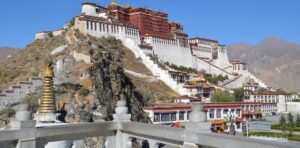
Visiting Jokhang Monastery and the Potala Palace in Lhasa offers a powerful glimpse into the heart of Tibetan culture and spirituality. Jokhang Monastery, the holiest temple in Tibet, is a vibrant center of worship where pilgrims gather daily, circling the temple and prostrating in devotion.
Just a short distance away, the iconic Potala Palace rises above the city, showcasing grand architecture and centuries of Tibetan history as the former winter residence of the Dalai Lama.
Together, these UNESCO World Heritage Sites provide a rich, unforgettable experience of Tibet’s deep religious heritage and majestic past.
A Drepung Monastery tour offers a fascinating journey into Tibetan Buddhism’s scholarly heart. Located about 8 kilometers west of Lhasa, Drepung Monastery was once the largest monastery in the world, housing over 10,000 monks at its peak.
Founded in 1416, it belongs to the Gelug (Yellow Hat) school of Tibetan Buddhism and was the original residence of the Dalai Lamas before the Potala Palace was built.
During the tour, you’ll explore a sprawling hillside complex filled with whitewashed buildings, ancient assembly halls, chapels, libraries, and peaceful courtyards. One of the highlights is the Ganden Palace, once the private residence of the 2nd through 5th Dalai Lamas. The monastery is also home to important Buddhist scriptures and artifacts, making it a vital place of learning and devotion.
Visitors can witness monks engaged in debates, chanting, and daily rituals, offering an authentic insight into monastic life. The panoramic views of the Lhasa Valley from the monastery are equally captivating.
A visit to Drepung is often combined with tours of nearby monasteries like Sera and Ganden, creating a full spiritual and cultural experience in the Lhasa region.
The drive from Lhasa to Shigatse is one of the most scenic road journeys in Tibet, covering approximately 270 kilometers (about 6–7 hours) through dramatic Himalayan landscapes, high mountain passes, and peaceful Tibetan villages. Traveling along the Friendship Highway, this route offers stunning views of snow-capped peaks, winding rivers, and turquoise lakes like Yamdrok Tso, one of Tibet’s most sacred lakes.
En route, you’ll pass through the Kampa La (4,794 m) and Karo La (5,045 m) mountain passes, both offering breathtaking photo opportunities, especially with views of Mount Nojin Kangtsang and its glaciers. A stop at Gyantse, a charming town along the way, lets you explore the famous Pelkor Monastery and its unique Kumbum stupa before continuing on to Shigatse.
Shigatse, Tibet’s second-largest city, is home to the magnificent Tashilhunpo Monastery, the traditional seat of the Panchen Lama. The drive not only connects two of Tibet’s most important cultural centers but also immerses travelers in the vast and spiritual landscape of the Tibetan Plateau.
The drive from Shigatse to Saga spans approximately 450 kilometers and takes around 8 to 9 hours, offering a remote and scenic journey deeper into western Tibet. As you travel west, the landscape becomes more rugged and desolate, with wide plains, snow-capped mountains, and isolated villages scattered along the way.
This route passes through small Tibetan settlements like Lhatse and crosses high-altitude passes and winding roads. Though long, the drive is rewarding, offering glimpses of authentic Tibetan life and breathtaking natural beauty as you approach Saga, an important stopover for those heading toward Mount Kailash and Lake Manasarovar.
The drive from Saga to Manasarovar (Lake Manasarovar) is a remote and spiritually evocative journey of approximately 300 kilometers, typically taking 6 to 7 hours. Traveling along rugged roads at altitudes often above 4,500 meters, you’ll pass through sweeping Tibetan plains, high mountain passes, and minimal settlements.
The landscape gradually shifts from stark desert to ancient lake country, and entering the sacred Lake Manasarovar region, the vast, shimmering blue waters emerge against a backdrop of snow-capped Himalayan peaks. This solemn, almost otherworldly route is a profound prelude to visiting one of the holiest lakes in Buddhism and Hinduism.
Exploring Lake Manasarovar is a deeply spiritual experience, as it is one of the holiest lakes in the world for both Hindus and Buddhists. Pilgrims often take a ritual dip in its sacred waters or perform a kora (circumambulation) along the shore, with stunning views of Mount Kailash in the distance.
After soaking in the serene beauty and peaceful atmosphere of the lake, the journey continues with a short drive of about 1.5 hours (roughly 40 km) to Darchen, the small town that serves as the gateway to the Mount Kailash kora trek.
Trekking from Darchen to Dirapuk is the first leg of the sacred Mount Kailash Kora, a revered pilgrimage for Hindus, Buddhists, and followers of the Bon religion. This segment spans approximately 20 kilometers and typically takes 5–6 hours to complete.
This trek is not just a physical journey but also a profound spiritual experience, connecting pilgrims with the sacred landscape of Mount Kailash.
Trekking from Dirapuk to Zuthulpuk via Gauri Kunda and Dolma La Pass is the second and most challenging day of the Mount Kailash Kora (circumambulation). This 20–22 km journey typically takes 8–10 hours and involves significant elevation changes, making it both physically demanding and spiritually profound.
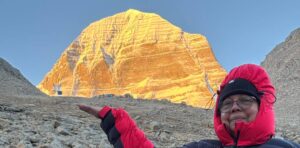
After completing the sacred trek around Mount Kailash, travelers make their way back to Darchen, the gateway town to the region. From Darchen, a scenic drive to Saga follows, covering roughly 250 kilometers along rugged high-altitude terrain.
The journey offers stunning views of the Tibetan plateau, snow-capped peaks, and remote villages, giving travelers a deeper glimpse into the region’s natural beauty and cultural richness. Saga serves as an important stopover town before continuing further explorations in Tibet or Nepal.
The drive from Saga to Kerung (also spelled Kyirong) marks an important leg on the journey between Tibet and Nepal. Covering approximately 350 kilometers, this route passes through stunning landscapes of high-altitude plains, rugged mountains, and traditional Tibetan villages.
The drive offers travelers breathtaking views and a chance to experience the unique culture of the Himalayan border region. Upon reaching Kerung, travelers prepare for border formalities before crossing into Nepal, making it a crucial gateway for those trekking or traveling between the two countries.
The drive from Kerung (Kyirong) to Kathmandu is a captivating journey that connects Tibet with Nepal. After completing border formalities at Kerung, travelers embark on a scenic route through the Himalayan foothills, passing lush valleys, terraced fields, and charming villages.
The drive typically takes around 8 to 10 hours, covering roughly 180 kilometers on winding mountain roads. This route offers stunning views of the majestic Himalayas and provides a smooth transition from the Tibetan plateau into Nepal’s vibrant capital city, Kathmandu.
After an unforgettable journey exploring the breathtaking landscapes and rich cultures of Tibet and Nepal, it’s time for your final departure to your onward destination.
Whether you’re heading home or continuing your adventure elsewhere, the memories of majestic mountains, sacred sites, and warm hospitality will stay with you. Safe travels and may your future journeys be just as inspiring and rewarding!
Cost Include
- 4 Night accommodation at Kathmandu on 3 star hotel on Twin Sharing basis
- 3 night at Lhasa & 1 Night at Shigatse
- Accommodation at Guest House during from Saga on common sharing basis with Tibetan common toilet.
- Sightseeing of Kathmandu city
- Kathmandu – Lhasa flight ticket.
- Kathmandu – China Border – Kathmandu by Non – A/C Vehicle
- Tibet group Visa Fee
- All vegetarian meals (breakfast, lunch & dinner)
- Transportation in Tibet by Luxury A/C Coach
- Supporting truck to carry equipment
- English speaking Tibetan guide
- All necessary travel & trekking permit as per our Itinerary
- Supporting crew members (Cooks, Helpers & Sherpas)
- Oxygen cylinders for emergency use & medical kit bag
- One duffle bag, One backpack, One cap, One passport holders, & Kailash Yatra completion certificate.
- Escort for airport pick up & drop off
- All applicable taxes & service charges.
Cost Exclude
- Travel insurance / Rescue and evacuation service
- Entrance fee of Monuments at Kathmandu & Lhasa
- Nepal Visa fee
- Tips for guide & driver and Personal expenses
- Horse riding (Around 3500 Yuan) during the Parikrama
- Air ticket to Kathmandu & return back to home.
- Extra Hotel charge in Kathmandu if early return from Tibet or extra stay at Kathmandu
- Addition cost due to any political disturbances
- Extra accommodation charges if flight is canceled due to bad weather or delay in Permit /Visa from Tibet (Please make sure your air ticket is flexible to change dates)
- Tips for staff
FAQs
The Mount Kailash Via Lhasa Tour is a spiritual journey starting from Lhasa, Tibet’s capital, to the sacred Mount Kailash. It includes visiting famous Tibetan sites like the Potala Palace and Jokhang Monastery, followed by trekking around Mount Kailash (the Kailash Kora).
This tour offers a mix of cultural exploration, stunning landscapes, and a profound pilgrimage experience.
The best time for the Mount Kailash Via Lhasa Tour is from May to October. During these months, the weather is relatively mild and stable, with clearer skies and less chance of heavy snowfall, making trekking and travel safer and more comfortable.
July and August bring some rain but also lush landscapes, while May, June, September, and October offer cooler temperatures and excellent visibility for stunning mountain views. Avoid winter months due to extreme cold and difficult road conditions.
The Mount Kailash Via Lhasa Tour typically takes around 15 to 18 days. This includes time to explore key sites in Lhasa, travel from Lhasa to Mount Kailash, complete the Kailash Kora trek (which usually takes 3 days), and return. The exact duration can vary depending on the itinerary, acclimatization needs, and travel pace.
During the Mount Kailash via Lhasa Tour, travelers can expect a mix of comfortable and basic accommodation along with simple but nourishing meals. In major cities like Lhasa, Shigatse, and Saga, hotels typically range from standard to 3-star comfort, offering clean rooms with private bathrooms, heating, and basic amenities.
As the journey progresses toward Mount Kailash, especially in remote areas like Darchen, Dirapuk, and Zuthulpuk, accommodation becomes more basic often simple guesthouses or dormitory-style lodges with limited facilities, shared bathrooms, and no heating.
Meals throughout the tour are typically Tibetan or Chinese in style, including dishes like rice, noodles, soup, vegetables, and momos (dumplings). In the cities, some international or Nepali options may also be available, but in remote areas, food is more limited and simple.
It’s recommended to carry personal snacks, such as dry fruits, instant noodles, or energy bars, especially during the kora trek where food services are minimal.
For the Mount Kailash Via Lhasa Tour, it’s important to pack layered clothing to handle varying temperatures, including warm jackets, thermal wear, and waterproof outerwear.
Sturdy trekking boots and comfortable shoes are essential for walking and hiking. Don’t forget sun protection like sunglasses and sunscreen, as well as a good water bottle.
Carry important documents such as your passport, Tibet permit, and visa. Bringing a basic first aid kit, altitude sickness medication, trekking poles, and a daypack will help ensure a safe and comfortable journey.
Getting a visa and permit for the Mount Kailash via Lhasa Tour requires preparation but is manageable with proper planning and a reliable travel agency. Here’s a short explanation:
It is not difficult, but it is strictly regulated. First, you need a Chinese visa, which must be obtained before entering China (usually from your home country). After that, your travel agency will apply for a Tibet Travel Permit, which is required to enter Lhasa and other parts of Tibet.
Additionally, you’ll need a Military Permit and Alien Travel Permit to visit Mount Kailash and other remote areas. These permits take time and are only issued through licensed Tibetan tour operators, so you must book your tour in advance through an authorized agency.
Yes, travel insurance is highly recommended and often mandatory for the Mount Kailash via Lhasa Tour.
This journey involves high-altitude trekking, remote regions, and unpredictable weather, so insurance provides essential protection. Your policy should cover:
High-altitude trekking (above 5,000 meters)
Emergency evacuation or helicopter rescue
Medical treatment and hospitalization
Trip cancellation or interruption
Loss or delay of baggage and personal items
Price Per Person
On Reuest