Mera Peak Climbing

Tour Duration
17 Days

Best time to go
Sep-Nov, Mar-May

Group Size
2-25 People

Max Altitude
6476m

Accommodation
Teahouse

Tour Grade
moderate

Area
Everest Region

Hours of Walking
5-9 Hours per day

Start point - End point
Kathmandu
Introduction to Mera Peak Climbing
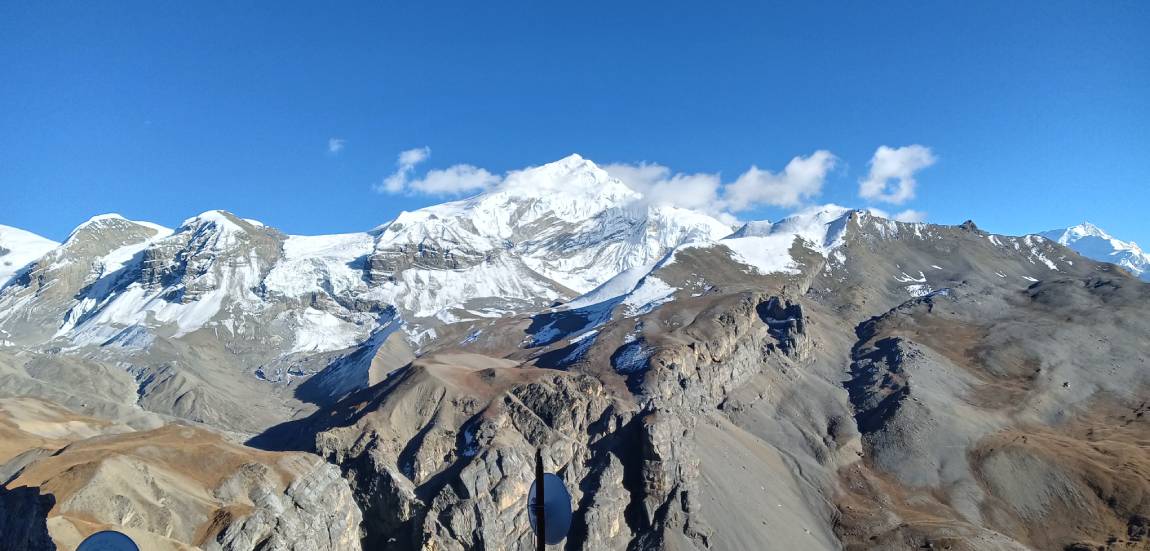
Mera Peak, standing at 6,476 meters (21,247 feet) tall, is one of the most elevated trekking peaks in Nepal and an exhilarating and demanding experience for climbers to enjoy Himalayan mountaineering without calling for advanced technical skills. Located in the Mahalangur part of the Nepalese Himalayas, Mera Peak provides climbers stunning panoramic vistas of some of the globe’s tallest peaks, such as Mount Everest, Lhotse, Makalu, Cho Oyu, and Ama Dablam.
Mera Peak Climbing is typically regarded as an excellent introduction to climbing at high altitude since it’s a combination of trekking and glacier travel, which is perfect for experienced trekkers who want to push themselves towards mountaineering. Mera Peak itself does not require greater technical proficiency such as rock climbing but at least elementary knowledge of using crampons and ice axes. The ascent involves trekking through secluded villages, rainforests, alpine meadows, and stone land before it reaches the high-altitude base camps and the final glacier hike to the peak.
The Mera Peak Climbing normally starts from Lukla after a scenic flight from Kathmandu and passes through the beautiful Hinku and Hinku Valley regions. Climbers along the route are exposed to affluent Sherpa culture, breathtaking mountain scenery, and diverse Himalayan flora and fauna. The trekking adventure lasts for about 14 to 18 days, giving sufficient time for acclimatization to prevent altitude sickness.
Mera Peak Climbing is a rewarding journey for adventurers who seek breathtaking mountain scenery, the thrill of reaching the summit of a Himalaya, and the private experience of exploring closer to Nepal’s natural and cultural heritage. It is just the perfect balance of trekking and climbing challenge, and hence, it is one of the most popular destination for climbers seeking to venture into the world of high-altitude adventure.
Main Theme of Mera Peak Climbing
The key theme of Mera Peak Climbing ascent is the balance of adventure, challenge, and cultural insight that defines a Himalayan mountaineering experience open to non-technical climbers. Mera Peak, standing at 6,476 meters, offers a unique opportunity for trekking enthusiasts and aspiring mountaineers to ascend one of Nepal’s highest trekking peaks, with the excitement of high-altitude mountaineering combined with the Nepalese Himalayas’ beauty and spirituality.
In its very nature, Mera Peak climbing is a test of pushing oneself and attaining a high-altitude peak in a relatively safe and comfortable manner. While it demands good physical fitness and acclimatization, the technicality is moderate, making it a superb introduction for those who are new to mountaineering. Climbers can enjoy the physical and mental stress of trekking on rugged trails, glacier travel, and the use of primitive climbing equipment such as crampons and ice axes. It is this blending of trekking and climbing that sets Mera Peak apart from purely trekking trails or very technical climbs.
Another pervasive theme is the deep connection with Nepal’s natural and cultural landscape. The trek path passes through typical Sherpa villages, allowing climbers to see the unique lifestyle, customs, and warm hospitality of the Himalayas’ inhabitants. The majestic view of mythic mountains like Everest, Lhotse, and Ama Dablam reinforces the powerful force of nature and the sublime beauty of the Himalayas.
Last but not least, the voice of preparation and perseverance permeates the expedition. Acclimatization, coordination, and perseverance are necessary to conquer physical adversity and altitude issues. Climbing Mera Peak successfully is not merely a physical achievement but a personal triumph that reflects the spirit of adventure and searching for self.
Conclusion of Mera Peak Climbing
Mera Peak climbing is a once-in-a-lifetime experience that balances adventure, cultural exploration, and self-satisfaction perfectly. Being one of the highest trekking peaks in Nepal, Mera Peak offers a unique opportunity for explorers to experience the high-altitude mountaineering adventure without the high level of technicality of other Himalayan peaks. Physical endurance, mental resilience, and good acclimatization are needed for the climb, but are available for experienced trekkers willing to tackle the challenges of the high-altitude terrain.
Throughout the journey, climbers are immersed in the resplendent splendor of the Nepalese Himalayas. Trekking via fertile forests and typical Sherpa towns or traversing alpine meadows and glaciers, the landscape never fails to remind expeditions of the wild and majesty of nature. The expansive panoramic vistas at the top, with iconic summits such as Everest, Lhotse, Makalu, and Ama Dablam, welcome climbers with an unparalleled feeling of triumph and wonder.
Apart from the physical climb, Mera Peak offers a worthwhile cultural experience. Sherpa heartiness and hospitality and their strong spiritual connection with the mountains enhance the experience to be more enriching and informative on Himalayan culture. The cultural element makes the expedition not only a physical challenge but also an insightful experience with a unique culture.
Lastly, climbing Mera Peak is not merely climbing to a summit on a map; it is the triumph of determination, foresight, and courage. It motivates the climbers to move beyond their limits, encouraging self-enrichment and an understanding of the magic of nature. If you are a seasoned mountaineer or avid trekker seeking your first high-altitude climb, Mera Peak is a rewarding and thrilling adventure that leaves a lasting imprint on body and spirit.
Itinerary
After arriving in Kathmandu, the capital city of Nepal situated at an altitude of 1,400 meters, you will be met by a representative and transferred to your hotel. Take this time to settle in, relax after your journey, and begin soaking in the vibrant atmosphere of the city.
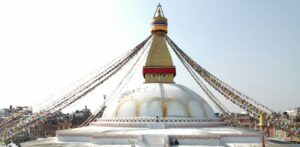
Kathmandu sightseeing and trek preparation typically take place on the first day or two after arrival in Nepal. During this time, you can explore some of the city’s UNESCO World Heritage Sites, such as Swayambhunath (Monkey Temple), Pashupatinath Temple, Boudhanath Stupa, and Kathmandu Durbar Square, offering a glimpse into Nepal’s rich cultural and spiritual heritage.
Meanwhile, your trekking agency or guide handles permit arrangements, gear checks, and final briefings for the Mera Peak expedition. This period also allows for some rest and last-minute shopping before heading into the mountains.
The journey begins with a scenic and thrilling flight from Kathmandu to Lukla (2,840m), offering stunning views of the Himalayas. Upon landing, the trek starts with a gentle descent and gradual ascents through pine forests, small villages, and farmland.
After a few hours of trekking, you reach Paiya (2,730m), a peaceful village surrounded by lush hills. This first trekking day helps ease you into the trail and provides time to adjust to the mountain environment.
The trek from Paiya to Panggom (2,846m) involves a mix of uphill and downhill sections through dense forests, suspension bridges, and traditional farming villages.
The trail climbs steadily to the Panggom La Pass, offering beautiful views of the surrounding hills and peaks. After crossing the pass, the path descends slightly before reaching the quiet village of Panggom, home to the Rai and Sherpa communities. It’s a culturally rich and scenic day that helps with gradual acclimatization.
The trek from Panggom to Ningsow (2,863m) is a moderate hike through lush forests and terraced farmland, passing small traditional villages along the way.
The trail offers peaceful surroundings and glimpses of local life, with gentle climbs and descents that help with acclimatization. Ningsow is a quiet village where trekkers can rest and enjoy the serene mountain atmosphere before continuing deeper into the trekking route.
The trek from Ningsow to Chhatra Khola (2,800m) follows a scenic trail that meanders through mixed forests and farmland, crossing several small streams and suspension bridges.
The route is mostly gentle with some gradual climbs, offering peaceful views of the surrounding hills and local villages. Chhatra Khola is a tranquil spot beside a river, providing a perfect resting place after a day’s hike.
The trek from Chhatra Khola to Kothe (3,600m) involves a steady ascent through dense rhododendron and pine forests, with occasional open spots offering stunning mountain views.
The trail becomes steeper as you approach Kothe, a small village nestled in the hills that serves as a great acclimatization stop. Kothe’s peaceful surroundings and fresh mountain air make it a refreshing place to rest before continuing higher.
The trek from Kothe to Thaknak (4,350m) is a challenging but rewarding ascent through alpine forests that gradually give way to open meadows and rocky terrain.
As you climb higher, the air becomes thinner and the landscape more rugged, with stunning views of snow-capped peaks emerging in the distance. Thaknak is a small, remote settlement that serves as an important acclimatization stop before continuing toward Mera Base Camp.
The trek from Thaknak to Khare (5,045m) is a steep and demanding climb through rocky terrain and sparse alpine vegetation. As you ascend, the air grows thinner, making acclimatization crucial.
Khare is a small, high-altitude settlement that serves as the last major stop before heading to Mera Peak’s Base Camp, providing essential rest and preparation for the final summit push.
The acclimatization day at Khare (5,045m) is crucial for adjusting to the high altitude before attempting the summit. During this day, climbers typically rest or take short hikes around the area to help their bodies adapt to the thinner air.
This time also allows for final preparations, checking equipment, and building strength and stamina for the challenging climb ahead to Mera Peak’s summit.
The trek from Khare to Mera High Camp (5,780m) is a steep and physically demanding climb across rocky and icy terrain. As you ascend, the air becomes much thinner, requiring slow, careful pacing to avoid altitude sickness.
The High Camp serves as the final staging point for the early morning summit push, offering spectacular views of the surrounding peaks and glaciers. Resting here is essential to prepare for the challenging summit day ahead.
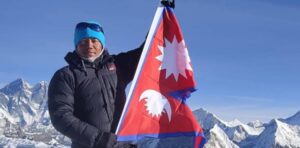
Summit day on Mera Peak begins very early, with climbers ascending from Mera High Camp (5,780m) to the summit at 6,476 meters. The climb involves navigating steep snow and ice slopes using crampons and ice axes, demanding both physical endurance and careful focus.
Once at the summit, climbers are rewarded with breathtaking panoramic views of Everest, Lhotse, Makalu, and other towering peaks. After celebrating the achievement, the descent back to Khare (5,045m) begins, allowing climbers to rest and recover after a long and exhilarating day.
The trek back from Khare to Kothe (3,600m) is a long but gradual descent through the same scenic alpine forests and meadows you passed on the way up. Descending helps with recovery and acclimatization as the air becomes thicker and the terrain less challenging.
Along the way, you can enjoy peaceful mountain views and the chance to reflect on the accomplishment of the climb while preparing for the final days of the trek.
The trek from Kothe to Thuli Kharka is a pleasant journey through beautiful alpine meadows and scattered forests. The trail involves moderate ascents and descents, offering stunning views of surrounding peaks and a chance to experience peaceful mountain pastures. Thuli Kharka is a quiet and scenic spot, perfect for resting before continuing the descent toward lower elevations.
The trek from Thuli Kharka to Lukla via the Zatrwa La Pass (4,600m) is a challenging but rewarding route. Crossing the pass involves a steep climb with spectacular panoramic views of the Himalayan range.
After summiting Zatrwa La, the trail descends through forests and villages, passing through traditional Sherpa settlements before reaching Lukla. This final stretch offers a mix of adventure and cultural experiences, marking the end of the trekking journey.
After an early breakfast, you’ll take a scenic flight from Lukla (2,800m) back to Kathmandu (1,300m).
The flight offers breathtaking aerial views of the Himalayan peaks and the valleys below, providing a memorable end to your trekking adventure. Once you arrive in Kathmandu, you’ll be transferred to your hotel where you can relax, freshen up, and celebrate the completion of your incredible journey in the Everest region.
Today marks the end of your unforgettable journey. After breakfast, you will check out from your hotel and be transferred to Tribhuvan International Airport for your onward flight to your next destination.
We hope you take with you wonderful memories of the Himalayas, the vibrant culture, and the incredible experiences you’ve had along the way. Safe travels and we look forward to welcoming you again in the future.
Cost Include
- Airport pick up and transfer to hotel
- 3 nights’ accommodation in Kathmandu on twin sharing basis with breakfast
- Welcome or Farewell dinner in Kathmandu at one of the typical Nepalese local restaurant
- Accommodation during the trek (lodge/ tea house/tent)
- All meals during the trek (breakfast/lunch/dinner)
- A day guided city tour of Kathmandu valley
- Required private transport at Kathmandu
- Necessary group climbing gear (Climbing rope, ice axe, ice crew, and snow bar)
- Kathmandu- Lukla- Kathmandu flight, airport taxes, and transfer
- Everest National Park Permit/ trekking & TIMS Card
- Mera Peak Special Climbing Permit
- One experienced Climbing guide for the climbing section &
- One trekking guide for the trekking Section (both leaders are
- English speaking, first aid trained, the climbing leader is trained & licensed from Nepal Mountaineering Association- Rock climbing and mountaineering trained), the cost of camping and trekkers crew/ Insurance
- All necessary Gov. Taxes and service charges
- Transfer to the airport for the final departure by private vehicle
Cost Exclude
- Nepal arrival visa
- Meals in the city except breakfast and other mentioned special dinner
- Personal expenses like all kinds of drinks including mineral water, alcohol and soft beverages
- Extra Hot showers, Wi-Fi & battery charging while on a trek
- Extra baggage excess while flying to Lukla (only 15 kg included)
- Extra porter if you required (it cost USD25 per day)
- Monument entrance fees while on a tour in Kathmandu (approx USD26 per person)
- Your travel insurance that covers Helicopter evacuation
- Any other extended trips and accommodation
- Tipping to staff (as an appreciation)
- Personal climbing gear
- Which things is not mention on included list
FAQs
Mera Peak climbing is a high-altitude trekking and mountaineering adventure in the Khumbu region of Nepal, reaching an elevation of 6,476 meters (21,247 feet). It is considered one of the highest trekking peaks in Nepal and is ideal for physically fit trekkers with basic mountaineering skills.
The climb involves trekking through remote valleys, crossing glaciers, and using equipment like crampons and ice axes, but does not require advanced technical climbing. Mera Peak offers stunning panoramic views of five of the world’s tallest mountains, including Everest, Lhotse, and Makalu, making it a rewarding and accessible Himalayan expedition.
Mera Peak climbing is considered a moderately difficult expedition, suitable for trekkers with good physical fitness and some basic mountaineering experience.
While the ascent is not highly technical, it involves trekking at high altitudes, glacier travel, and the use of equipment like crampons, ropes, and ice axes. The main challenge is the altitude, as the summit reaches 6,476 meters, where the air is thin and the risk of altitude sickness increases.
With proper acclimatization, guided support, and preparation, most fit and determined trekkers can successfully reach the summit.
Mera Peak climbing typically takes around 14 to 18 days, depending on the chosen itinerary and acclimatization schedule. The journey usually starts with a flight to Lukla, followed by several days of trekking through remote valleys like the Hinku Valley to allow proper altitude adjustment.
After reaching Mera Base Camp and possibly High Camp, the summit attempt is made, usually with an early morning start. The descent follows the same or a similar route back to Lukla. The total duration includes trekking, rest days, and contingency time for weather or altitude-related delays.
During the Mera Peak trek, food and accommodation are mainly provided by local tea houses in villages along the route, offering basic but hearty meals such as dal bhat, noodles, soups, pasta, and pancakes.
These tea houses also serve hot drinks like tea, coffee, and garlic soup, which helps with altitude. As you ascend to higher altitudes, especially near Mera Base Camp and High Camp, facilities become more basic, and meals are usually prepared by the expedition crew. While the food is simple, it is filling and designed to provide the energy needed for high-altitude trekking and climbing.
For Mera Peak climbing, it is essential to bring a well-prepared medical kit to handle common trekking and high-altitude issues. Key medications include Diamox (acetazolamide) to help prevent and manage altitude sickness, along with pain relievers like ibuprofen or paracetamol for headaches and muscle aches.
Anti-diarrheal medicine such as loperamide, and oral rehydration salts are important for treating dehydration and stomach problems. You should also carry antibiotics prescribed by your doctor for potential respiratory or gastrointestinal infections.
Basic first-aid items like antiseptic cream, band-aids, blister treatment (such as moleskin or Compeed), and gauze are useful for cuts and foot issues. Additionally, cold and flu medicine, throat lozenges, and motion sickness tablets can be helpful, especially for the flight to Lukla or rough trails.
Don’t forget any personal prescription medications and consider carrying a small oxygen canister or pulse oximeter if you’re concerned about altitude. Always consult a doctor before your trip to ensure your medical kit is complete and suitable for high-altitude trekking.
Yes, travel insurance is essential for Mera Peak climbing. Due to the high altitude (6,476 meters) and remote location, your insurance should specifically cover high-altitude trekking and climbing usually up to at least 6,500 meters.
It must also include emergency helicopter evacuation, which is often the only way to get medical help quickly in case of altitude sickness, injury, or other emergencies. Additionally, your policy should cover medical expenses, trip cancellation or interruption, lost or stolen gear, and flight delays.
Without proper insurance, emergency services in the mountains can be extremely costly, so having comprehensive coverage is a critical part of your preparation.
The best time for Mera Peak climbing is during the pre-monsoon (spring) season from April to early June and the post-monsoon (autumn) season from late September to November.
During these periods, the weather is generally clear and stable, offering excellent mountain views and moderate temperatures. Avoiding the monsoon season (June to August) is recommended due to heavy rain, slippery trails, and increased risks of landslides. Winter months can be extremely cold and challenging because of snow and harsh weather conditions.
Price Per Person
on request